
10 natural tips to increase your pregnancy chances show why understanding fertility is important, as in their mid to late twenties, women are approximately 25%–30% likely to conceive without medical intervention. This percentage decreases as women age over time.
A woman’s fertility rate is not a linear progression and is influenced by the male partner as well. Some women may conceive very quickly, while others may take a longer time. By adopting a healthy lifestyle and knowing what your body is doing, you can increase your chances of pregnancy.
If you’ve been wondering how to become pregnant and would like some natural ways of doing this, then this article contains practical tips that are backed up by scientific research for you to read about.
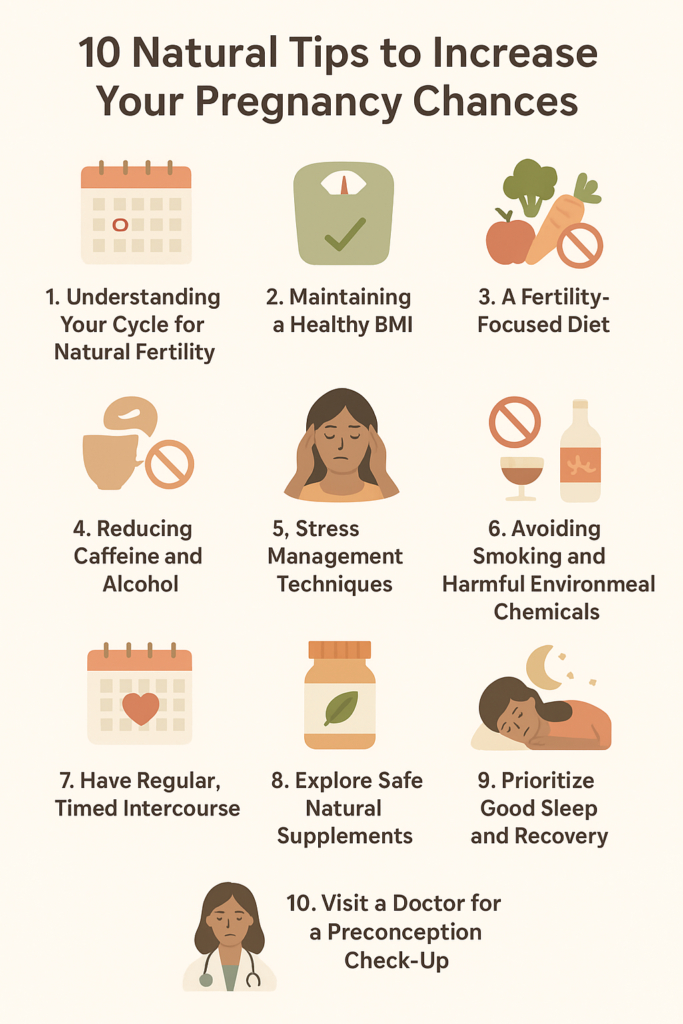
10 Natural Tips to Increase Your Pregnancy Chances
Here are 10 natural tips to increase your pregnancy chances:
1. Understanding Your Cycle for Natural Fertility in 2025
If you want to get pregnant quickly, start by getting to know what time of month you ovulate, as knowing this simple fact will increase your chances of conceiving.
On average, women will ovulate on day 14 of their cycle, if they have 28-day cycles; however, depending on how long their cycle is, ovulation may occur earlier or later in your cycles. When you determine when your body releases an egg (ovulates), you are able to make it easier and faster to conceive.
There are many ways to track your ovulation, which can include ovulation testing kits (OTKs), basal body temperature (BBT) charting or using an app that tracks your periods.
Many applications provide approximate dates when you are likely to ovulate along with fertile windows when conceiving is most possible, therefore you can schedule when to have sexual intercourse on days when the chance of conception is highest.
2. Maintaining a Healthy BMI to Improve Fertility Naturally
Body weight has a significant role regarding fertility. Low and high BMI levels of <18.51 and >24.99 respectively can cause hormonal imbalances and alter ovulation cycles.
Healthy BMI levels are often between 18.51 – 24.99; however, this is not always true, so you should consult a qualified dietitian to identify your healthiest body weight for enhancing your fertility.
3. A Fertility-Focused Diet for Natural Conception
What you eat can directly affect your ability to become pregnant. To be most fertile, you should maintain a healthy, balanced diet; a diet rich in fruits and vegetables, whole grains, proteins (i.e. lean meats, nuts and legumes), low-fat dairy, healthy oils (e.g. plant-based oils) and plenty of water will contribute to a healthy reproductive system.
4. Reducing Caffeine and Alcohol for Better Conception Success
Limiting both caffeine and alcohol is a basic step that can contribute greatly to the likelihood of success with natural conception when following the natural tips to increase your pregnancy chances.
5. Stress Management Techniques to Support Fertility
Stress Management Techniques Stress is not a direct cause of infertility, but it does affect hormone levels that regulate ovulation and sexual activity. High stress levels can decrease sexual desire, which results in decreased frequency of sexual intercourse.
To help alleviate your stress and maintain an active sexual life, engage in some form of relaxation technique or find a simple hobby. A calm mind and body support healthy reproductive functions.
6. Avoiding Smoking and Harmful Environmental Chemicals
Avoiding Harmful Chemicals and Tobacco Use. Tobacco and chemicals from pesticides, plastic containers (specifically those made from BPA), and various cleaning products are detrimental to both egg and sperm quality.
Tobacco contributes to decreased egg and sperm quality, which decreases the likelihood of becoming pregnant. In females, smoking is known to accelerate the age-related decline in ovarian function; for males, the consumption of tobacco produces low sperm counts and motility rates.
To mitigate the negative effects of chemical exposure on your reproductive health, choose organic foods, utilise glass vs plastic containers, and choose natural cleaning products.
Have Regular, Timed Intercourse
Having regular sexual activity during the fertile period is the easiest and most efficient way to boost your chances of getting pregnant. You should try to have sex every 2 – 3 days throughout your entire menstrual cycle and have sex every day during ovulation, if it is possible to do so.
This will help create the best opportunity for healthy sperm to come in contact with an egg that has reached full maturity, thus increasing your likelihood of natural conception.
8. Explore Safe Natural Supplements
Studies have shown that certain supplements can support fertility health. Folic acid, vitamin D, iron, and omega-3 fatty acids are recommended for women for better uterine and egg quality.
While to improve sperm’s quality benefit from zinc, vitamin C, and coenzyme Q10 to improve sperm quality. However, not all supplements are suitable for everyone; consult your doctor. Before starting, it is important to consult a doctor to ensure safety and correct dosage.
9. Prioritise Good Sleep and Recovery
According to studies, there are specific vitamins and nutrients that can help improve fertility. Women who want to improve their chances of getting pregnant should consider taking folic acid, vitamin D, iron, and omega-3 fatty acids. Men who want to improve the quality of their sperm should look into taking zinc, vitamin C and Co-Q10 supplements.
There are many different types of supplements available, but not every type of supplement will be the right one for every person; therefore, it is advisable to discuss your options with your physician prior to taking any new supplement. Additionally, your doctor can provide you with guidance on safe use and dosing of the supplements you decide upon.
10. Visit a Doctor for a Preconception Check-Up
A preconception check-up helps identify potential issues that may affect your fertility. A doctor may assess your medical history, recommend tests, and suggest supplements to improve egg and sperm quality. This will help yoy get your body ready for a healthy pregnancy.
Read More
- How Does Age Affect Women Fertility
- How Often Should Women Get a Gynecological Check-Up
- What is Considered a High-Risk Pregnancy
Frequently Asked Question
Q. How long should we keep trying to get pregnant before seeing our doctor to discuss fertility issues?
We recommend that women see their health care provider for a fertility assessment if they have been attempting to get pregnant for over 1 year (or if they are over 35!).
Q. What lifestyle modifications can affect male and/or female fertility positively?
Maintaining an appropriate body mass index (BMI), eating a balanced diet, stopping smoking and drinking alcohol, and reducing your level of anxiousness/stress all have a positive effect on the male and female reproductive systems.
Q. What vitamins are helpful in increasing a woman’s chance of conceiving naturally?
A few vitamins and minerals that are known to assist with the overall health and function of the male and female reproductive systems are: women — folic acid, vitamin D, and omega-3 fatty acids; men — zinc and vitamin C.
Q. Does having a lot of stress in your life directly affect a man’s ability to get a woman pregnant?
While stress by itself does not directly lead to infertility, it does have an adverse impact on both hormone levels and sexual activity, therefore decreasing your chances for conception.
Conclusion
To enhance your chances of becoming pregnant, a check-up that identifies areas of concern within your body will help detect and manage any problems that are interfering with your ability to have children.
Following the 10 natural tips to increase your pregnancy chances helps you understand your body better. During this type of examination, the physician will look through your medical record, conduct various tests, and discuss taking vitamins and other supplements to enhance both egg and sperm quality, thus preparing your body for a successful pregnancy.