
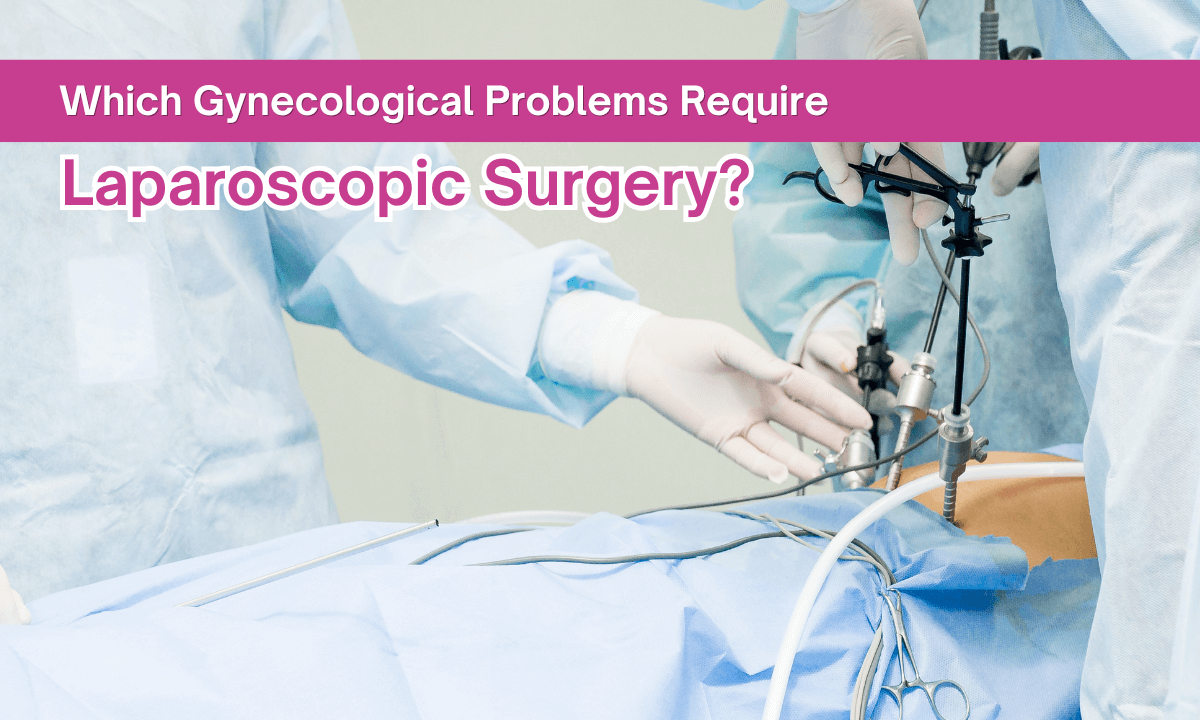
Laparoscopic surgery, often called “keyhole” or minimally invasive surgery, has transformed how gynecological conditions are treated. Instead of a single, large abdominal incision, a laparoscopic surgery involves making a few small cuts—usually between 0.5 and 1.5 centimeters. A thin, lighted tube with a camera (a laparoscope) is inserted, projecting a magnified view of your pelvic organs onto a screen. Specialized instruments are used through the other small openings to perform the laparoscopic surgery with exceptional precision.
The benefits are compelling: significantly less postoperative pain, minimal scarring, a lower risk of infection, shorter hospital stays, and a much faster return to daily activities and work compared to traditional open surgery. But it’s not the solution for every situation. This guide, developed with medical expertise, will explain the key conditions where laparoscopic surgery is often the most effective and recommended treatment path.
When is Laparoscopic Surgery the Recommended Solution?
The decision to proceed with laparoscopy is made after a thorough evaluation, considering your specific diagnosis, symptom severity, overall health, and personal goals, such as future fertility. The following are primary conditions where this advanced approach is frequently employed.
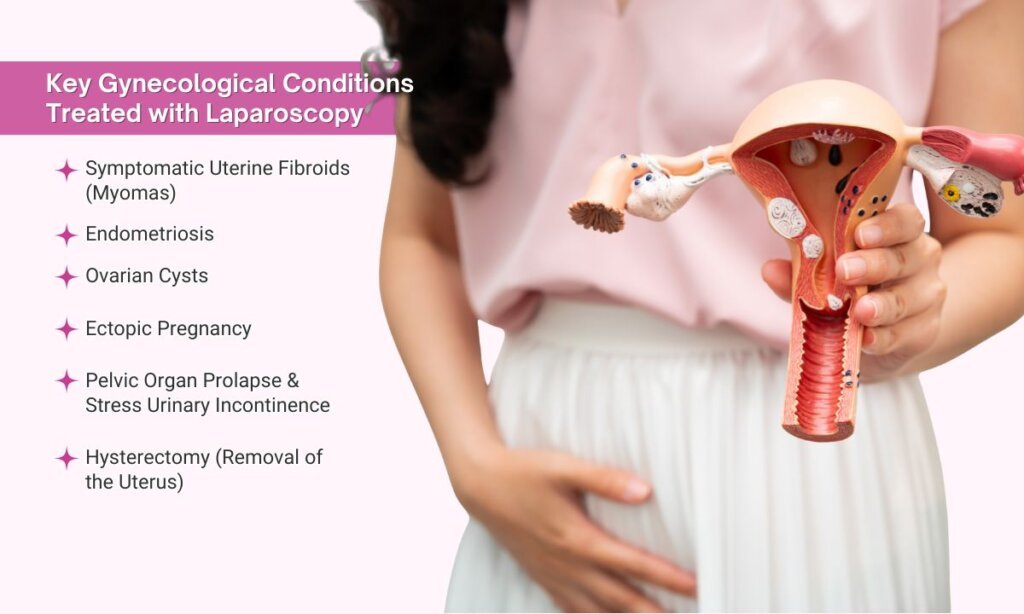
1.Laparoscopic Surgery for Uterine Fibroids
Uterine fibroids are benign tumors that grow in the muscular wall of the uterus. They can cause heavy, prolonged menstrual bleeding (often leading to anemia), pelvic pressure or pain, frequent urination, and can sometimes contribute to infertility or pregnancy complications.
- When is Laparoscopy the Right Choice? Laparoscopy is typically recommended when fibroids cause disruptive symptoms, do not respond adequately to medication, and you wish to preserve your uterus. This is crucial for women who desire future pregnancy or simply want to keep their uterus.
- The Procedure: Laparoscopic Myomectomy. This is the surgical removal of fibroids while meticulously repairing and preserving the uterus. It is a technically demanding procedure that requires significant surgical skill to control bleeding and reconstruct the uterine wall securely. For women in Gurgaon seeking this fertility-preserving option, Dr. Parima Dixit, a renowned gynecologist, specializes in advanced laparoscopic myomectomy.
2. Treating Endometriosis with Laparoscopic Surgery
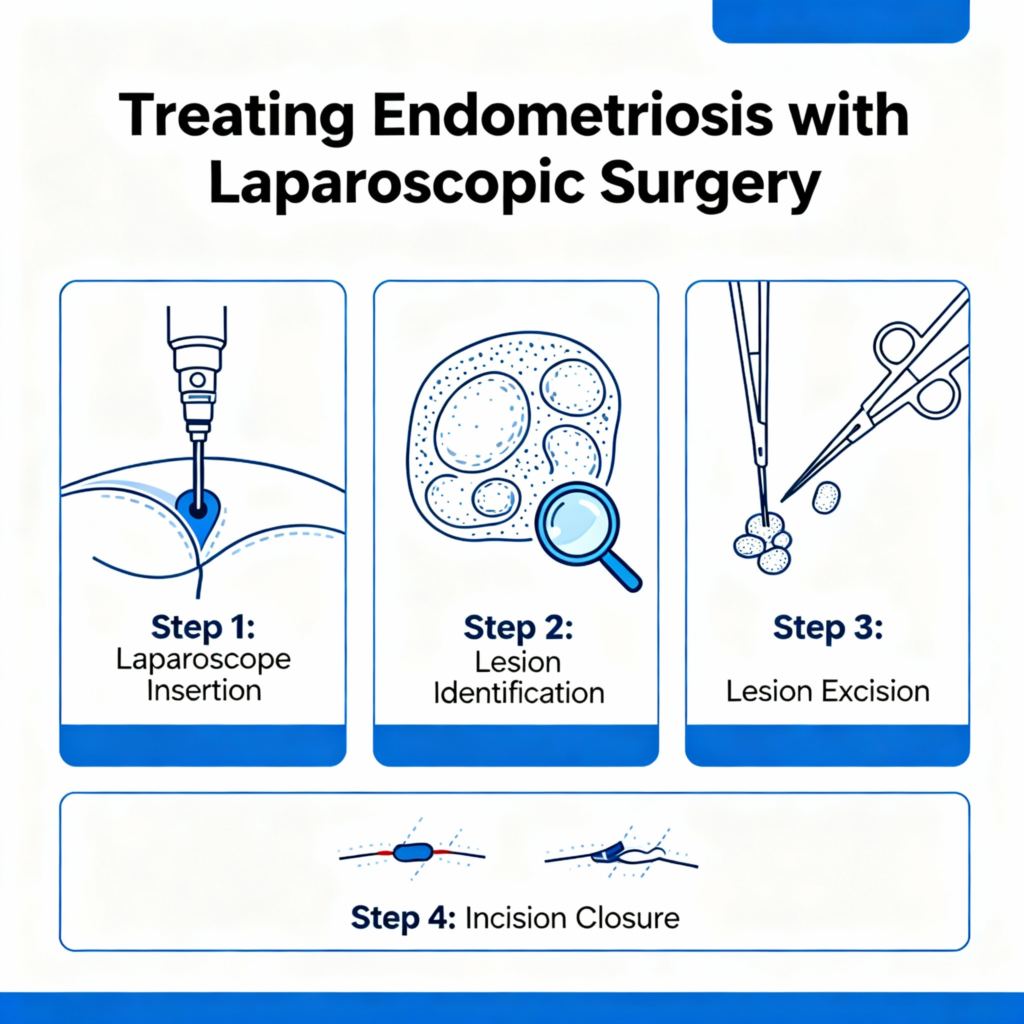
Endometriosis is a chronic condition where tissue similar to the lining of the uterus grows outside of it, commonly on the ovaries, fallopian tubes, and pelvic lining. This tissue responds to hormonal cycles, causing inflammation, severe pelvic pain, painful periods, pain during intercourse, and often, infertility.
- When is Laparoscopy the Right Choice? Laparoscopy is the gold standard for both diagnosing and treating endometriosis. If symptoms strongly suggest endometriosis and do not improve with initial medication, diagnostic laparoscopy is advised. During the same procedure, surgical treatment can be performed.
- The Procedure. The surgeon uses fine instruments to precisely excise (cut out) or ablate (vaporize) the endometrial implants and divide adhesions (scar tissue). Complete excision of deep endometriosis lesions is associated with significant pain relief and improved chances of natural conception.
3. Ovarian Cysts and Laparoscopic Surgery
Ovarian cysts are fluid-filled sacs that develop on or within an ovary. Most are harmless (functional cysts) and disappear on their own. However, some cysts—such as dermoid cysts, cystadenomas, or endometriomas (“chocolate cysts” from endometriosis)—can grow large, cause persistent pain, twist (causing ovarian torsion, a surgical emergency), or have suspicious features.
- When is Laparoscopy the Right Choice? For cysts that are persistent, large (usually >5 cm), complex in appearance on ultrasound, cause significant pain, or if ovarian torsion is suspected.
- The Procedure: Laparoscopic Cystectomy. The surgeon carefully drains the cyst and removes its wall (cystectomy) while preserving the healthy ovarian tissue. This is vital for maintaining ovarian function and fertility. In some cases, such as a non-cancerous but severely damaged ovary, removal of the entire ovary (oophorectomy) may be necessary.
4. Laparoscopic Surgery for Ectopic Pregnancy
An ectopic pregnancy is a life-threatening condition where a fertilized egg implants and grows outside the main cavity of the uterus, most commonly in a fallopian tube.
- When is Laparoscopy the Right Choice? It is the standard surgical approach for an ectopic pregnancy that has ruptured, is causing significant pain or bleeding, has a high or rising hCG level, or when medication (methotrexate) is not suitable or has failed.
- The Procedure. The surgeon locates the ectopic pregnancy. Depending on the extent of damage to the tube and your desire for future fertility, the procedure may be a salpingectomy (removal of the affected fallopian tube) or a salpingostomy (making a small incision in the tube to remove the pregnancy while leaving the tube in place).
5. Laparoscopic Surgery for Pelvic Organ Prolapse
These conditions result from a weakening of the pelvic floor muscles and ligaments, often due to childbirth, aging, or chronic straining.
- Pelvic Organ Prolapse: Involves the descent of the uterus, bladder, or rectum into the vaginal canal, causing a sensation of pressure, bulging, or fullness.
- Stress Urinary Incontinence: Involves the leakage of urine during activities like coughing, sneezing, or exercise.
- When is Laparoscopy the Right Choice? For women who require surgical correction after conservative treatments like pelvic floor physiotherapy have not provided sufficient relief.
- The Procedures.
- Laparoscopic Sacrocolpopexy: Considered a superior treatment for apical prolapse (descent of the uterus or vaginal vault). The surgeon uses a soft mesh to suspend the top of the vagina to the sacrum (tailbone), providing durable support.
- Laparoscopic Burch Colposuspension: An effective procedure for stress incontinence where the neck of the bladder is lifted and supported.
6. Laparoscopic Hysterectomy:
A hysterectomy may be recommended for conditions like very large fibroids, severe endometriosis or adenomyosis, chronic pelvic pain unresponsive to other treatments, abnormal uterine bleeding, or certain cancers.
- When is Laparoscopy the Right Choice? Whenever anatomically and medically feasible, a laparoscopic approach is strongly preferred over an open abdominal hysterectomy due to its significant recovery advantages.
- The Procedure: Laparoscopic Hysterectomy. The uterus is detached from its supporting structures using instruments inserted through the small incisions. It is then removed either through the vagina or morcellated (divided into small pieces) and extracted. You can explore this less invasive option further on the detailed service page for Laparoscopy Hysterectomy at Dr. Parima Dixit’s practice.
Read More:
- High-Risk Pregnancy Care for 2026: Symptoms to Observe and planning a safe birth
- What are the risks of untreated PCOS
- What is the Normal Duration of a Menstrual Cycle
- What Are the Causes of White Discharge?
- https://drparimadixitgynecologist.com/how-to-deal-with-perimenopause/
- https://drparimadixitgynecologist.com/difference-gynecologist-obstetrician/
Determining if Laparoscopic Surgery is Right for You:
- Diagnosis of Unexplained Infertility or Chronic Pelvic Pain: Laparoscopy allows direct visualization of the pelvic organs to identify issues like subtle endometriosis or adhesions not seen on ultrasound.
- Tubal Sterilization: For permanent contraception.
- Removal of Pelvic Adhesions: Scar tissue from prior surgery or infection that causes pain or bowel obstruction.
- Certain Gynecologic Cancers: In select, early-stage cases, laparoscopy can be used for staging and treatment by specialized oncology surgeons.
Making an Informed Decision: Is Laparoscopy Right for You?
While laparoscopy offers profound benefits, it is a major surgical procedure that requires a highly skilled surgeon and is not suitable for every patient or condition.
A laparoscopic approach may not be recommended if:
- The patient has an extremely large uterine or tumor size that makes safe minimally invasive removal difficult.
- There is a history of multiple prior abdominal surgeries leading to dense, extensive adhesions.
- The patient has certain severe heart or lung conditions that pose a high risk with the carbon dioxide gas used to inflate the abdomen during surgery.
- The surgeon suspects widespread cancer where a larger incision may be necessary for optimal treatment.
- In rare cases of uncontrolled bleeding during surgery, conversion to an open procedure may be required for safety.
The cornerstone of good care is a personalized, detailed consultation. An experienced laparoscopic surgeon will review your medical history, symptoms, and diagnostic tests (like ultrasound or MRI) to determine if this minimally invasive path aligns with your health needs and personal objectives.
For women in the Gurgaon area seeking expert evaluation, a consultation with a specialist like Dr. Parima Dixit can provide the clarity needed. With extensive training in advanced laparoscopic techniques, she offers comprehensive care to determine the most appropriate and effective treatment plan for your unique situation.
Disclaimer: This educational content has been reviewed and approved by Dr. Parima Dixit to ensure medical accuracy. It is intended for informational purposes only and is not a substitute for professional medical advice, diagnosis, or treatment. Always seek the advice of your own qualified physician or gynecologist with any questions you may have regarding a medical condition.