
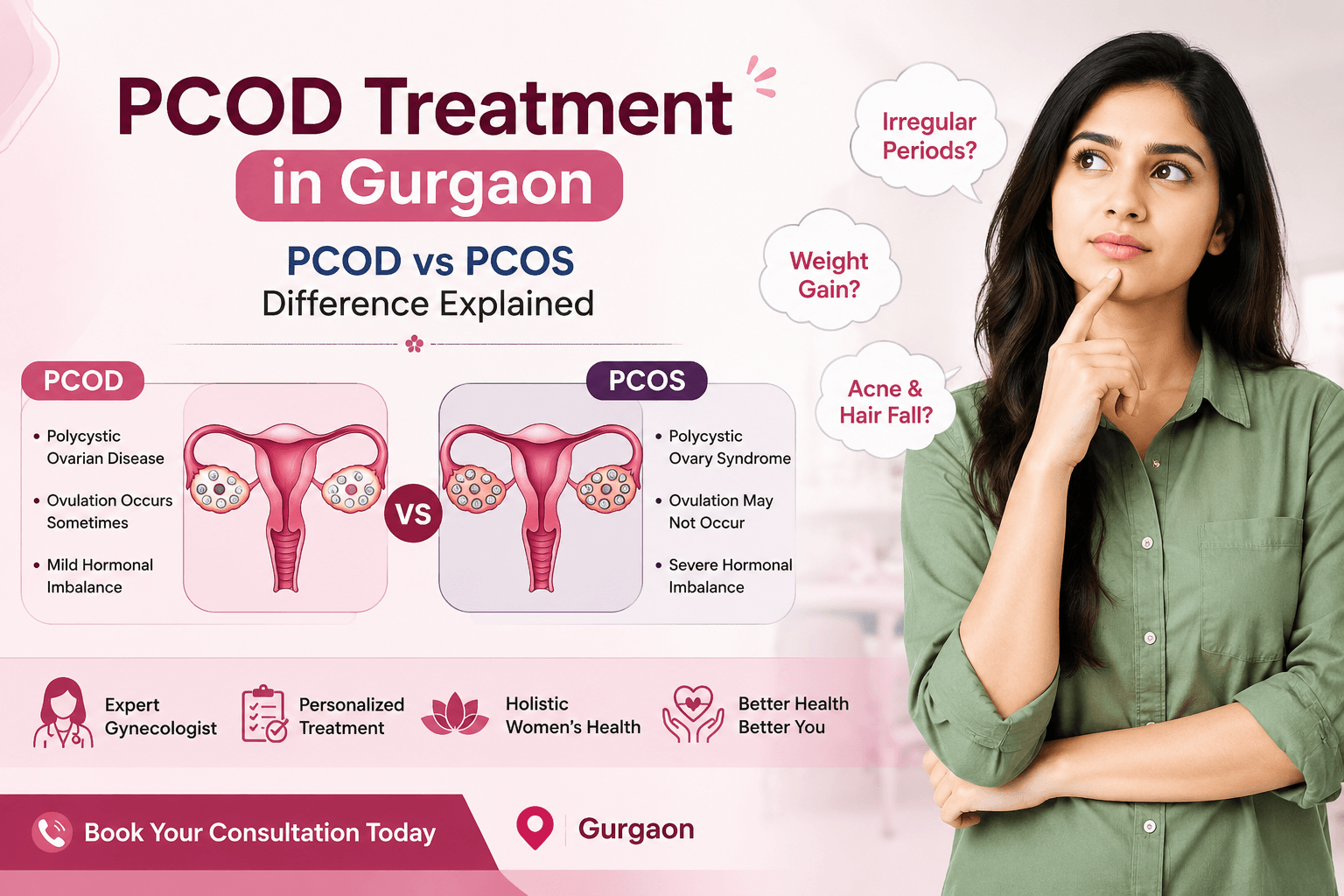
As a gynecologist offering PCOD treatment in Gurgaon, I see patients every week who come in worried, confused, and full of questions. This blog is my attempt to give you the clearest, most honest answers possible — so you can understand your body, ask the right questions, and take the right steps for your health.
If you have recently been told you have PCOD or perhaps PCOS and you are not sure what either of these means, you are in very good company. These two terms are among the most-searched and most-confused topics in women’s health in India today. Many doctors, diagnostic labs, and even health websites use PCOD and PCOS interchangeably, which only adds to the confusion.
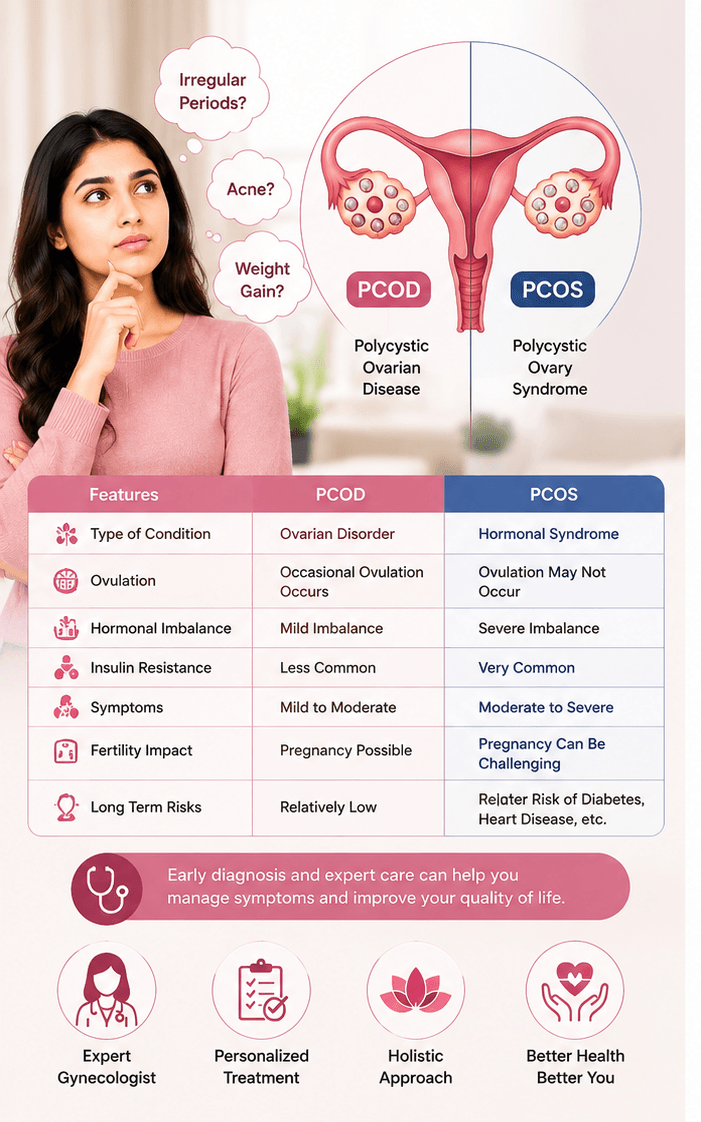
What is PCOD? Understanding Polycystic Ovarian Disease
PCOD — which stands for Polycystic Ovarian Disease — is a condition in which the ovaries produce a large number of immature or partially mature eggs. Over time, these eggs accumulate in the ovaries and form small, fluid-filled sacs called cysts. As a result, the ovaries become enlarged and begin producing higher-than-normal amounts of male hormones called androgens.
PCOD is primarily considered an ovarian disorder — meaning the main issue is with how the ovaries are functioning. For women seeking PCOD treatment in Gurgaon, it is important to understand that this is a relatively common condition affecting approximately 22.5% of menstruating women in India, particularly younger women in their teens and twenties. The good news is that PCOD is generally considered milder than PCOS and is often manageable with the right lifestyle changes.
Women undergoing PCOD treatment in Gurgaon under expert guidance may still ovulate occasionally, which means natural pregnancy is often possible — though it may take more time or require some medical support. In many cases, sustained changes in diet, exercise, and stress management can significantly improve or even reverse PCOD symptoms.
What is PCOS? Understanding Polycystic Ovary Syndrome
PCOS — Polycystic Ovary Syndrome is a more complex and serious condition. Unlike PCOD, which is primarily an ovarian issue, PCOS is a full-body hormonal and metabolic disorder. It affects not just the ovaries but the entire endocrine system, including insulin production, adrenal function, and overall hormonal balance.
In PCOS, the body produces significantly elevated levels of androgens. This hormonal excess disrupts the normal ovulation cycle in some women, ovulation may stop entirely. PCOS is also closely linked to insulin resistance, where the body’s cells do not respond properly to insulin, leading to elevated blood sugar levels and a range of metabolic complications.
PCOS affects approximately 18–22% of Indian women of reproductive age — one of the highest prevalence rates in the world. If left unmanaged, PCOS carries long-term health risks including Type 2 diabetes, cardiovascular disease, endometrial cancer, and fertility challenges.
Key fact: PCOS is a full-body hormonal syndrome. It affects multiple systems — ovaries, metabolism, insulin, and long-term health. It requires more active medical management than PCOD.
PCOD vs PCOS – Key Differences at a Glance
Here is a clear, side-by-side comparison of PCOD and PCOS to help you understand the difference:
| Factor | PCOD | PCOS |
| Full Form | Polycystic Ovarian Disease | Polycystic Ovary Syndrome |
| Type of Condition | Ovarian disorder | Full-body hormonal syndrome |
| Severity | Milder | More serious |
| Hormonal Imbalance | Mild androgen excess | Significant androgen excess |
| Insulin Resistance | Less common | Very common (70%+ of cases) |
| Effect on Ovulation | Occasional ovulation possible | Ovulation may stop entirely |
| Prevalence in India | ~22.5% of women | ~18–22% of women |
| Fertility Impact | Moderate — pregnancy often possible | Significant — fertility treatment often needed |
| Long-term Health Risks | Relatively limited | High — diabetes, heart disease, cancer risk |
| Reversible? | Often reversible with lifestyle changes | Manageable but not curable |
| Treatment Approach | Lifestyle first, mild medication if needed | Lifestyle + medications + monitoring |
Symptoms — What Does PCOD Feel Like vs PCOS?
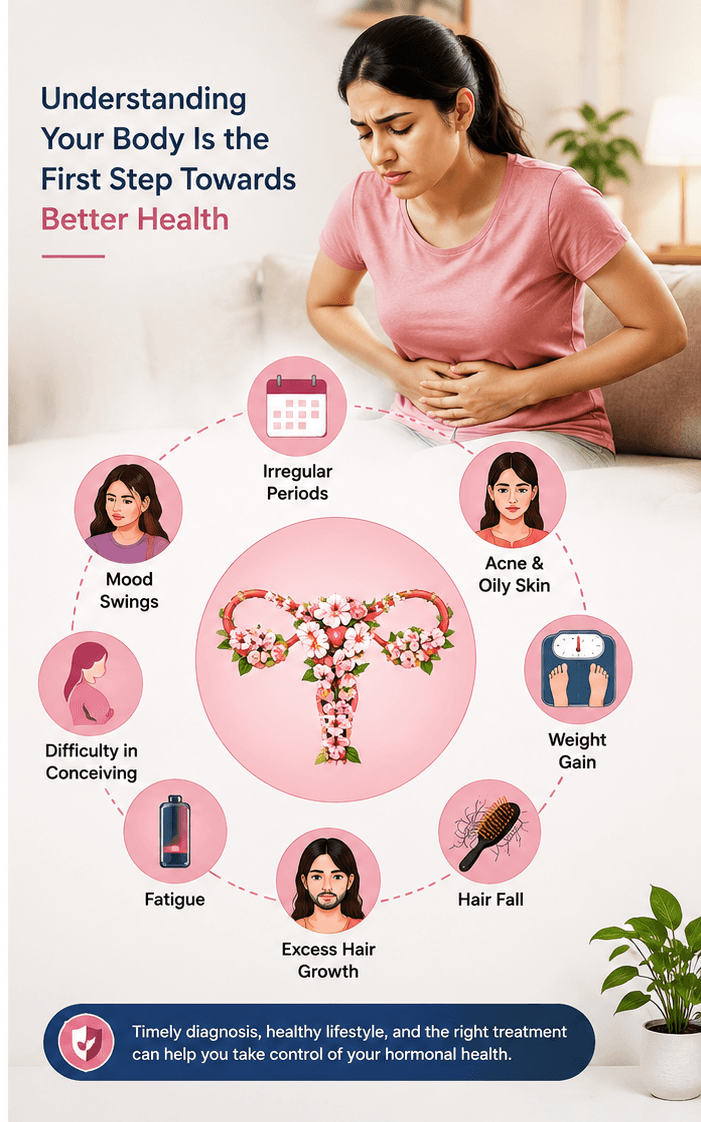
Many symptoms overlap between PCOD and PCOS, which is why they are so often confused. Here is what to look for:
Common Symptoms of PCOD
- Irregular or delayed periods — but periods do still occur
- Mild weight gain, especially around the abdomen
- Acne and oily skin — moderate in severity
- Mild hair thinning on the scalp
- Mild unwanted hair growth on the face or body
- Difficulty getting pregnant but natural conception is often possible
- Ovarian cysts visible on ultrasound
Symptoms of PCOS — Often More Pronounced
- Very irregular, infrequent, or completely absent periods
- Significant, stubborn weight gain — particularly belly fat
- Severe, persistent acne — often cystic, on the jawline and chin
- Noticeable hair thinning or male-pattern hair loss at the crown
- Heavy, dark hair growth on the face, chin, chest, and abdomen (hirsutism)
- Dark patches of skin on the neck, underarms, or groin (acanthosis nigricans)
- Chronic fatigue, mood swings, anxiety, or depression
- Difficulty conceiving — may require fertility treatment
- Blood sugar irregularities or pre-diabetes signs
Important: You do not need every symptom on this list to have PCOD or PCOS. Even 2–3 of these signs are enough reason to see a gynecologist for proper evaluation. Do not self-diagnose based on an ultrasound report alone.
Which is More Serious — PCOD or PCOS?
PCOS is considered the more serious condition. Here is why:
- PCOS affects the entire hormonal and metabolic system — not just the ovaries
- PCOS is associated with long-term health risks including Type 2 diabetes, cardiovascular disease, high blood pressure, and endometrial cancer
- PCOS causes more severe fertility challenges — ovulation may stop entirely
- PCOS typically requires more active, long-term medical management
- PCOD is milder and often reversible — many women see significant improvement with lifestyle changes alone
That said, neither condition should be ignored. Both PCOD and PCOS require proper diagnosis and a personalised management plan — especially if you are trying to conceive or have a family history of diabetes or hormonal disorders.
How Are PCOD and PCOS Diagnosed?
The diagnosis of both PCOD and PCOS follows a similar process. As a specialist in PCOD treatment in Gurgaon, here is what I typically assess during a consultation:
Step 1: Detailed Medical History
- Your menstrual cycle pattern — how regular, how heavy, how long
- Symptoms you have been experiencing and for how long
- Family history of PCOD, PCOS, diabetes, or thyroid disorders
- Weight changes, diet, exercise habits, and stress levels
Step 2: Physical Examination
- BMI and waist measurement
- Signs of androgen excess — skin, hair, acne
- Blood pressure check
- Signs of insulin resistance — skin darkening, skin tags
Step 3: Investigations
- Pelvic Ultrasound — checks for cysts on the ovaries and ovarian size
- Hormone Panel — LH, FSH, testosterone, AMH, estrogen, prolactin
- Insulin and fasting blood glucose — to check for insulin resistance
- Thyroid function tests — to rule out thyroid disorders (similar symptoms)
- Lipid profile — to assess cardiovascular risk in PCOS
PCOS is diagnosed using the Rotterdam Criteria — at least 2 of 3 features must be present: irregular ovulation, elevated androgen levels, and polycystic ovaries on ultrasound. PCOD is diagnosed primarily through ultrasound and symptom history.
PCOD Treatment in Gurgaon – What Are Your Options?
The approach to PCOD treatment in Gurgaon depends on your specific symptoms, age, and whether you are planning a pregnancy. Here is a complete overview of treatment options:
1. Lifestyle Modifications — The Most Powerful Treatment for PCOD
For PCOD in particular, lifestyle changes are the single most effective treatment. Research shows that even a 5–10% reduction in body weight can restore regular periods and significantly improve hormonal balance.
- Diet: Low-GI foods — whole grains, vegetables, legumes, lean protein. Reduce refined carbs and sugar.
- Exercise: 30 minutes of moderate activity 5 days a week. Both cardio and strength training are beneficial.
- Sleep: 7–8 hours of quality sleep. Poor sleep worsens cortisol and insulin levels.
- Stress management: Yoga, meditation, mindfulness — chronic stress worsens hormonal imbalance.
2. Medications for PCOD
- Combined Oral Contraceptive Pills — to regulate periods and reduce androgen levels
- Metformin — improves insulin sensitivity, supports weight management, and helps restore ovulation
- Anti-androgens (Spironolactone) — reduces unwanted hair growth and acne
- Progestins — for women who do not want contraception but need period regulation
3. PCOS Treatment — Additional Options
For PCOS, treatment is more comprehensive and long-term, often combining lifestyle therapy with medications and regular monitoring. For women with PCOS seeking fertility treatment in Gurgaon, options include:
- Letrozole or Clomiphene — to stimulate ovulation
- Trigger injection (hCG) — to time ovulation for planned conception
- IUI (Intrauterine Insemination) — when ovulation induction alone is insufficient
- IVF — for complex cases, with specialised PCOS protocols to prevent ovarian hyperstimulation
- Laparoscopic Ovarian Drilling — a minimally invasive surgical option when medications have not worked
PCOD and Pregnancy — Can You Still Conceive?
This is the question I am asked most often in my clinic by patients seeking PCOD treatment in Gurgaon — and the answer is reassuringly positive.
Women with PCOD generally have a good chance of conceiving naturally, especially with lifestyle improvements. Since women with PCOD do still ovulate (even if irregularly), the window for natural conception exists. Tracking ovulation, improving diet, and managing weight can make a significant difference.
For women with PCOS who wish to conceive, the journey may require more medical support — but the majority of women with PCOS who receive proper care do go on to conceive successfully. IVF is rarely the first step. Most begin with ovulation induction, then IUI, and only progress to IVF if needed.
My advice as your gynecologist: If you have PCOD or PCOS and are trying to conceive, do not wait too long before consulting a specialist. The earlier we start, the more options we have — and the better your chances.
When Should You See a PCOD Doctor in Gurgaon?
Please do not wait for symptoms to become severe before seeking help. Consult a gynecologist if:
- Your periods are irregular, missing, or very heavy
- You have been trying to conceive for more than 6 months without success
- You have noticeable hair growth on your face or body
- You are experiencing stubborn weight gain despite a healthy lifestyle
- You have persistent acne that does not respond to skincare
- Your blood sugar or insulin levels have been flagged as elevated
- You feel persistently fatigued, anxious, or low in mood
- You have a family history of PCOD, PCOS, diabetes, or hormonal disorders
- You were told you have ‘cysts on your ovaries’ on an ultrasound and are unsure what it means
You can also find me on Google — check patient reviews, clinic location, and book your appointment directly through my Google Business Profile.
Conclusion
PCOD and PCOS are two of the most misunderstood conditions in women’s health — but they do not have to be overwhelming. Understanding the difference between them is the first step toward getting the right care and taking control of your health.
Whether you are looking for PCOD treatment in Gurgaon, navigating a new diagnosis, managing hormonal imbalance, or planning a pregnancy — personalised, expert guidance makes all the difference.
As a gynecologist who has helped hundreds of women in Gurgaon manage PCOD and PCOS, I am here to answer your questions and build a treatment plan that works for your life — not a generic protocol.
If you are specifically dealing with PCOS, you may also find our detailed guide helpful — PCOS Treatment in Gurgaon.
Frequently Asked Questions ( FAQs)
Q. Is PCOD and PCOS the same thing?
No, they are related but different conditions. PCOD is an ovarian disorder where immature eggs form cysts. PCOS is a broader hormonal syndrome affecting the entire body, including metabolism and insulin levels. PCOS is generally considered more serious.
Q. Can PCOD be cured permanently?
PCOD is considered highly manageable and in many cases reversible — particularly with sustained lifestyle changes. Many women see their periods normalise and ultrasound findings improve over time. PCOS, however, is a lifelong condition that requires ongoing management, though its symptoms can be very well controlled.
Q. I had an ultrasound that showed ‘multiple follicles’ — do I have PCOD or PCOS?
Not necessarily. Having multiple follicles on an ultrasound alone does not confirm PCOD or PCOS. A proper diagnosis requires your symptom history, physical examination, and blood hormone tests in addition to the ultrasound. Please consult a gynecologist for a complete evaluation — do not rely on an ultrasound report alone.
Q. Can a thin woman have PCOS?
Absolutely yes. Not all women with PCOS have weight gain. ‘Lean PCOS’ is a recognised condition where women have normal body weight but still experience the hormonal and metabolic features of PCOS. This is actually underdiagnosed in India because weight gain is often assumed to be a necessary feature of PCOS.
Q. Does PCOD go away after pregnancy?
For some women, PCOD symptoms improve after pregnancy due to the hormonal changes involved. However, this is not guaranteed. It is important to continue managing your health after pregnancy and not assume the condition has resolved without proper evaluation.
Q. Is PCOD hereditary?
Yes, there is a strong genetic component to both PCOD and PCOS. If your mother, sister, or aunt has been diagnosed, your risk is higher. However, lifestyle factors play a significant role — so even with a family history, you can significantly reduce your risk and manage symptoms effectively.
Q. Can I take hormonal tablets on my own to manage PCOD?
Please do not self-medicate. Hormonal medications need to be prescribed by a qualified gynecologist based on your specific hormonal profile, symptoms, and health goals. Taking the wrong medication — or the right medication at the wrong dose — can worsen hormonal imbalance or mask important symptoms. Always consult a specialist.
Q. How is PCOD different from PCOS in terms of diet?
The dietary approach is broadly similar for both — low-GI, anti-inflammatory, high in fibre and protein, and low in refined sugar and processed foods. For PCOS, managing insulin resistance through diet is especially important. Some women with PCOS also benefit from a lower carbohydrate intake. A personalised nutrition plan from your doctor is always best.